

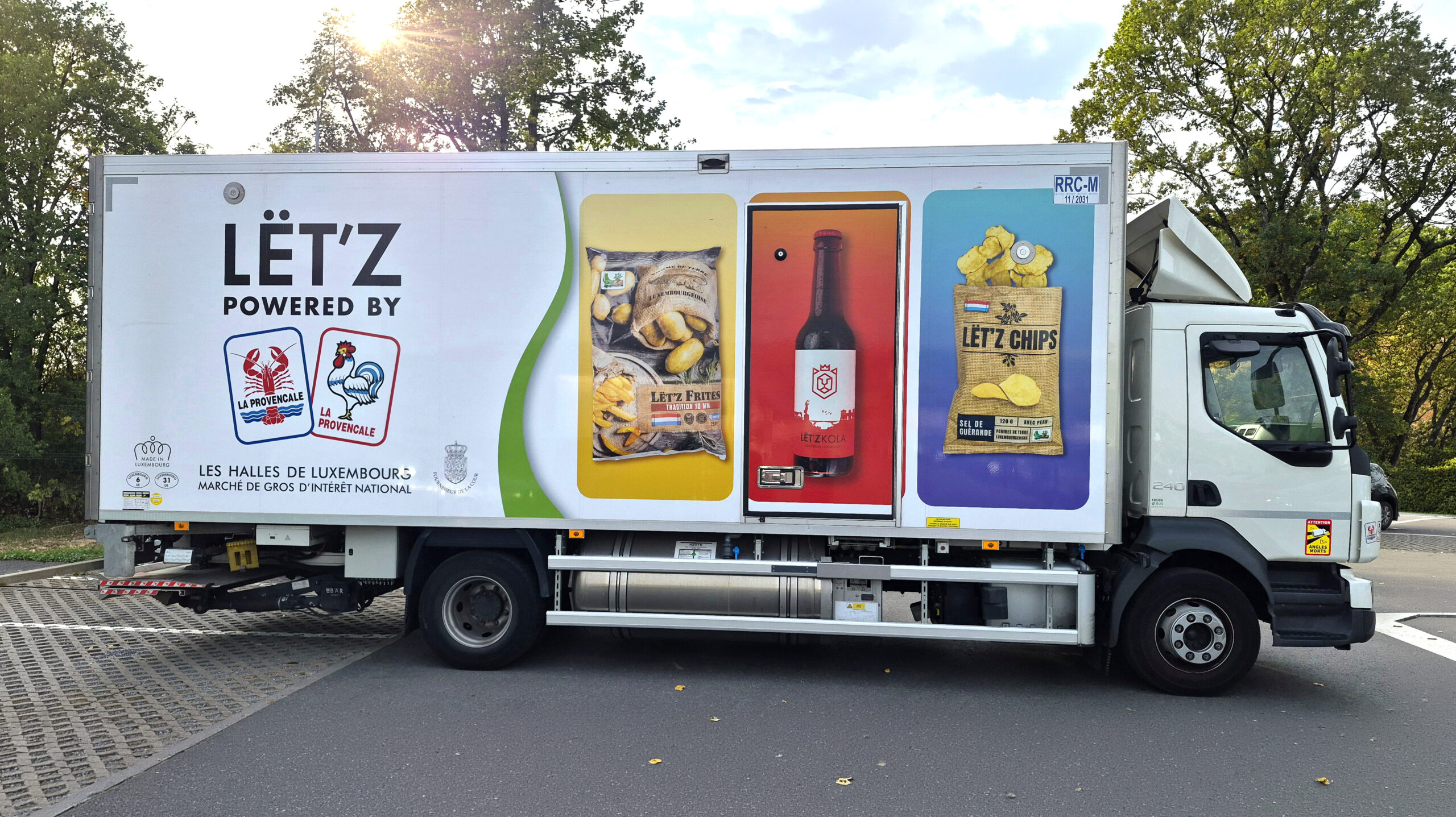
BlueSeal® : a key enabler of La Provençale’s transition to cryogenic refrigeration
La Provençale’s move towards cryogenic refrigeration shows that the transition is not only about how cold is produced, but also about how well it is retained. As transport operators look to reduce diesel consumption, emissions and the nuisance associated with deliveries, limiting cold loss becomes an important part of the equation. By reducing cold loss during frequent door openings, BlueSeal® helps preserve the liquid nitrogen needed to complete a full delivery round.
Diesel refrigeration units: proven technology, but energy-intensive
In a conventional set-up, the truck is fitted with a refrigeration unit that keeps the load compartment at the required temperature. This unit generally has its own diesel engine, which drives a compressor independently of the vehicle’s propulsion engine.
This solution is reliable and widely used. However, it also involves additional fuel consumption and in-use emissions, as well as noise, vibration and regular maintenance associated with the additional engine.
ccording to Carrier Transicold, a diesel refrigeration unit on a semi-trailer consumes on average around 1.8 litres of diesel per hour. These figures are based on controlled chamber testing in both chilled (2°C) and frozen (-20°C) modes, with simulated door openings to replicate real-world delivery conditions (fuel consumption is generally higher for frozen loads).
These constraints are particularly noticeable on multi-drop distribution routes. Each time a door is opened, cold air escapes while warm, humid air enters the compartments. The refrigeration unit then has to work harder to restore the required temperature, increasing fuel consumption and placing additional strain on the equipment.
“BlueSeal® was instrumental in our transition to liquid-nitrogen refrigeration as it limits cold loss every time a door is opened. Thanks to the resulting savings, our nitrogen tanks now have sufficient capacity to last the entire delivery round.”
Romuald Leclerc, Fleet Manager of La Provecale (translated from French)
Read the full testimonial from La Provencale
Cryogenic refrigeration: producing cold without an auxiliary diesel engine
Cryogenic refrigeration works differently. It relies on a cryogenic fluid stored in a dedicated tank. In refrigerated transport, the two main solutions are liquid nitrogen and liquid CO₂.
CO₂ and nitrogen technologies differ in terms of system design, refuelling infrastructure and environmental footprint. Liquid nitrogen is kept at around –196°C, while liquid CO₂ is stored under pressure at a higher temperature and used in a cryogenic circuit to cool the load compartment.
Why La Provençale chose cryogenic refrigeration
For La Provençale, one of the key reasons for moving towards cryogenic refrigeration was the possibility of doing away with the dedicated diesel engine used for cooling. This means less noise — a major benefit for urban and night-time deliveries — as well as fewer vibrations and lower maintenance requirements during daily delivery operations. The available cooling capacity also allows the compartments to be cooled down quickly and the required temperature to be restored rapidly after a door opening.
Autonomy: a key condition for the transition
With a diesel system, the refrigeration unit can continue to operate for as long as fuel is available. In a cryogenic vehicle, however, the amount of fluid on board is limited by the capacity of the tank.
Every influx of warm air and every loss of cold air leads to additional CO₂ or nitrogen consumption. On a route involving twenty to thirty door openings, these repeated losses can significantly reduce the available operating range.
The success of the transition to cryogenics therefore depends not only on the technology used to produce the cold. It also depends on the vehicle’s ability to retain it.
BlueSeal®: designed to solve exactly this challenge
This challenge goes right back to the reason why BlueSeal was invented in the first place.
Back in 2005, Hans Opdam was working on an on-board eutectic refrigeration system, where the available cooling energy was limited. If too much cold escaped during deliveries, the system would not last for the full route. The answer was to reduce those losses with an air curtain — the idea that eventually became BlueSeal®.
BlueSeal® creates an invisible air barrier across the vehicle door opening. When the door is open, it limits the exchange between the cold air inside and the warmer air outside, while keeping access to the goods completely unobstructed. It also makes loading and unloading easier by keeping visibility completely clear, unlike PVC strip curtains.
With a diesel refrigeration unit, reducing cold loss can help significantly reduce fuel consumption, as demonstrated by tests carried out by CSEF. With cryogenic refrigeration, the benefit is different but equally important: preserving the limited amount of cooling fluid carried on board.
More than two decades after BlueSeal® was first developed, the same principle is now supporting La Provençale’s transition to liquid-nitrogen refrigeration.
By reducing cold loss during its twenty to thirty door openings per delivery round, BlueSeal® helps ensure that the nitrogen tanks provide sufficient autonomy for the vehicles to return to the depot for their daily refill.
The transition in refrigerated transport is therefore not simply about replacing one energy source with another. It also starts with efficiency: producing only the cold that is needed, then retaining it for as long as possible.
Cryogenic technology produces the cold. BlueSeal® helps keep it in.
Sources :
- https://www.carrier.com/truck-trailer/en/eu/solutions/fuel-efficiency/ (see FAQ)
- https://www.linde-gas.com/processes/freezing-and-cooling
- https://europe.thermoking.com/wp-content/uploads/2019/07/TK80.22_CryoTech-08-2020-EN_V1.0.pdf (p3 The fluid used by CryoTech is liquid carbon dioxide. (CO₂ / R-744)
- https://www.provencale.lu/fr/notre-logistique Cryogenic nitrogen refrigerated truck
Voor meer informatie over BlueSeal luchtgordijnen kunt u contact opnemen met onze Brightec adviseurs op [email protected]